



Democratic Republic Of Congo
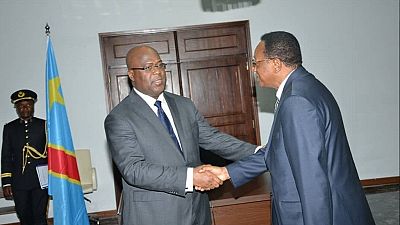
Democratic Republic of Congo’s outgoing government on Monday defended decrees granting former ministers lifetime salaries and other benefits following strong criticism in a country where most of the population lives in poverty.
Prime Minster Bruno Tshibala, who is due to submit his government’s resignation to new President Felix Tshisekedi in the coming days, signed the decrees last November, but they were only widely reported in the media last week.
One provides for former prime ministers, starting with Tshibala, to receive a monthly salary equivalent to 30 percent of the current prime minister’s, a monthly housing stipend of $5,000 and health care overseas.
The other decree calls for former ministers to receive monthly salaries equal to 30 percent of the current minister’s, a $1,000 monthly housing stipend and one international flight per year in business class.
A typical minister’s monthly salary is nearly $4,000.
DR Congo defends 'golden parachute' decree https://t.co/64H5vRSLQY
— catherine_tt (@catherine_tsr) February 4, 2019
Reports of the decrees’ provisions drew outcry from across the political spectrum, with one human rights activist, George Kapiamba, labelling it “an attempt to perpetuate a system of the pillage of public funds”.
Patrick Nkanga, an adviser to President Joseph Kabila who stepped down last month to make way for Tshisekedi, also criticised the measure.
“Granting so many lifetime privileges to an entire former government is not consistent with our socio-economic context,” Nkanga wrote on Twitter. “It is excessive and needlessly costly for the public treasury.”
Speaking at a news conference on Monday, Tshibangu Kalala, an adviser to Tshibala, said the decree was consistent with other laws granting benefits to retired officials, including former presidents and judges.
“The modest material advantages recognised for former high state officials…are not intended to enrich these officials but to grant them a vital minimum (salary) so they don’t fall … into indigence and precariousness,” Kalala said.
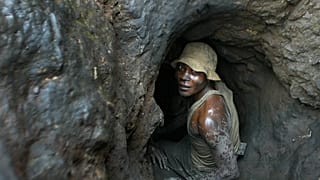
Congo is Africa’s leading copper producer and the world’s top miner of cobalt, which is essential to electric car batteries, but it remains one of the world’s least developed countries due largely to poor governance and corruption.
Kabila’s anti-corruption czar estimated in 2015 that Congo loses up to $15 billion a year due to fraud. The annual state budget is about $5 billion.
Tshisekedi has promised to crack down on corruption, but critics question whether he will have the authority to tackle the well-entrenched networks that perpetuate it.
So called 'Golden Parachute' laws were signed quietly in November, they provide exorbitant benefits to former members of Kabila's regime. Little more than legalized corruption in a country that can ill-afford to misdirect public funds. https://t.co/eJvHy6kVad
— Ross Conroy (@RossConroy) February 4, 2019
REUTERS


Go to video
US firm sues DR Congo over alleged bribery scheme
01:36
DRC: Funeral held for victims of drone strike blamed on govt forces
00:56
Algeria reach AFCON quarterfinal after dramatic win over DRC
Go to video
Patrice Lumumba lookalike goes viral supporting DR Congo at AFCON 2025
Go to video
Africa Cup of Nations: Algeria gears up to face DRC
Go to video
Renewed fighting near Uvira raises tensions in Eastern DR Congo